The Healthiest Bras to Wear in 2026
Updated: Jul 22

With more sports bras being flagged for high levels of BPA, PFAS, and other endocrine‑disrupting chemicals, many people are rethinking what “healthy” really means in their top drawer. Comfort, transparency, and skin‑safe materials are becoming essential.
This guide highlights the safest types of bras to wear — focusing on non‑toxic materials, breathable fabrics, and what to look for when choosing healthier options.

What People Look For in a “Healthy” Bra
More shoppers today want bras that support their wellbeing and align with their values. The most important qualities include:
Non‑toxic materials (PFAS‑free, BPA‑free, OEKO‑TEX or GOTS certified)
Natural, breathable fibers
Sustainable and ethical production
Soft, minimalist, modern aesthetics
Inclusive sizing and body‑positive messaging
Comfort that adapts to real bodies

Healthiest, Non‑Toxic Materials to Choose
These fibers are the safest, most skin‑friendly, and most transparent in their production:
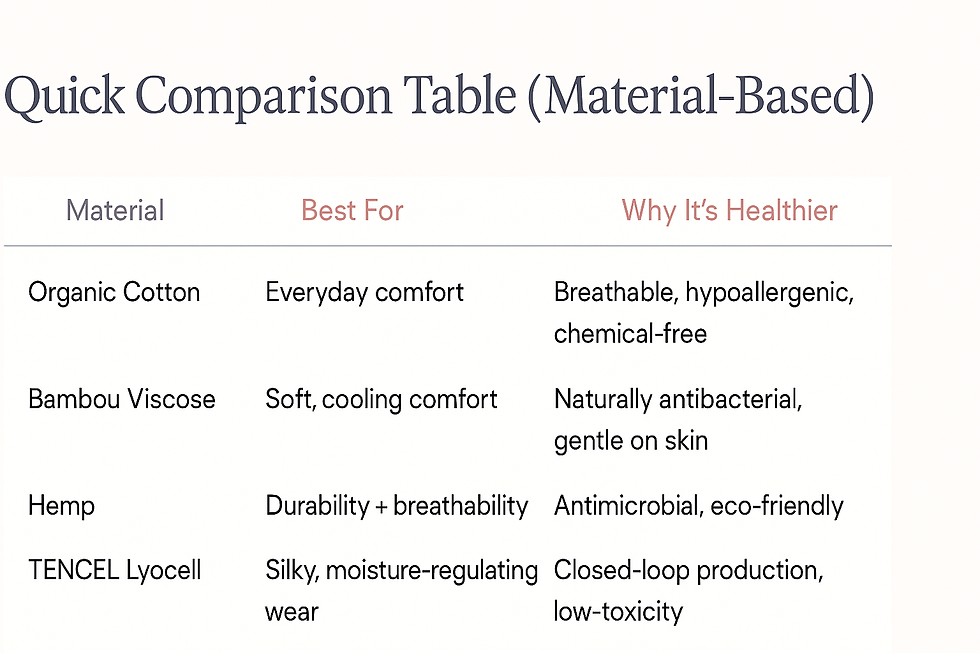
1. Organic Cotton
Hypoallergenic
Breathable
Free from synthetic coatings
Ideal for sensitive skin
2. Bamboo Viscose
Naturally antibacterial
Ultra‑soft and cooling
Great for lounging or low‑impact movement
3. Hemp
Durable, breathable, and naturally antimicrobial
A favorite among eco‑focused shoppers
4. TENCEL™ Lyocell
Silky, moisture‑regulating, and produced in a closed‑loop system
A premium feel without the chemical baggage
These materials avoid the chemical treatments often found in synthetic sports bras.

What to Look For When Choosing a Healthy Bra
Instead of focusing on brands, here are the qualities that matter most:
1. Natural Fiber Content
Choose bras made primarily from organic cotton, bamboo, hemp, or TENCEL. These materials are naturally breathable and less likely to contain harmful chemicals.
2. Transparent Certifications
Look for labels such as:
GOTS (Global Organic Textile Standard)
OEKO‑TEX Standard 100
Bluesign‑approved fabrics
These certifications help ensure the product is free from harmful substances.
3. PFAS‑Free and BPA‑Free Claims
If a bra is marketed as “moisture‑wicking,” “anti‑stain,” or “performance fabric,” check whether it is explicitly PFAS‑free.
4. Soft, Breathable Construction
Healthy bras should feel gentle on the skin, with minimal chemical odor and no stiff padding or harsh elastic.
5. Ethical and Sustainable Production
Look for brands that disclose their supply chain, dye processes, and environmental practices.

What to Avoid
If a bra has any of the following, it’s a red flag:
Polyester blends with BPA
PFAS‑treated “moisture‑wicking” or “anti‑stain” coatings
Strong chemical smell
Unlabeled synthetic blends
“Performance” fabrics that offer little to no transparency about what they're made of.

Are Only Sports Bras Affected?
No — it’s not just sports bras.
Newer testing shows that everyday bras (like T‑shirt bras, wireless bras, and bralettes) can also contain PFAS, BPA, or other chemical residues, especially when made from synthetic or moisture‑wicking fabrics.
Early studies focused on sports bras, but the concern now clearly extends across multiple bra categories.
This is why natural fibers and transparent certifications matter more than ever.
A Final Thought
In the end, choosing a healthy bra is simply choosing harmony with your own body. It’s the quiet luxury of softness, ease, and fabrics that actually breathe with you.
It becomes a small, intentional way of caring for yourself — a gentle reminder that comfort isn’t an indulgence, but something you’re meant to feel every single day.