Maternity vs Nursing Bras: What to Choose and What Actually Matters
Updated: Jul 9
Your size can change during pregnancy and after. Our Bra Calculator can help you find a more comfortable fit.
Maternity and nursing bras are often confused, but they’re designed for different stages and different needs.
Choosing the right one can make a meaningful difference in comfort, support, and how your body feels throughout pregnancy and beyond.
This guide will help you understand the difference, explore the most common types, and choose what works best for your body.

What’s the Difference Between Maternity and Nursing Bras?
The main difference comes down to function and timing.
Maternity bras are designed for pregnancy. They focus on comfort, flexibility, and gentle support as your body changes.
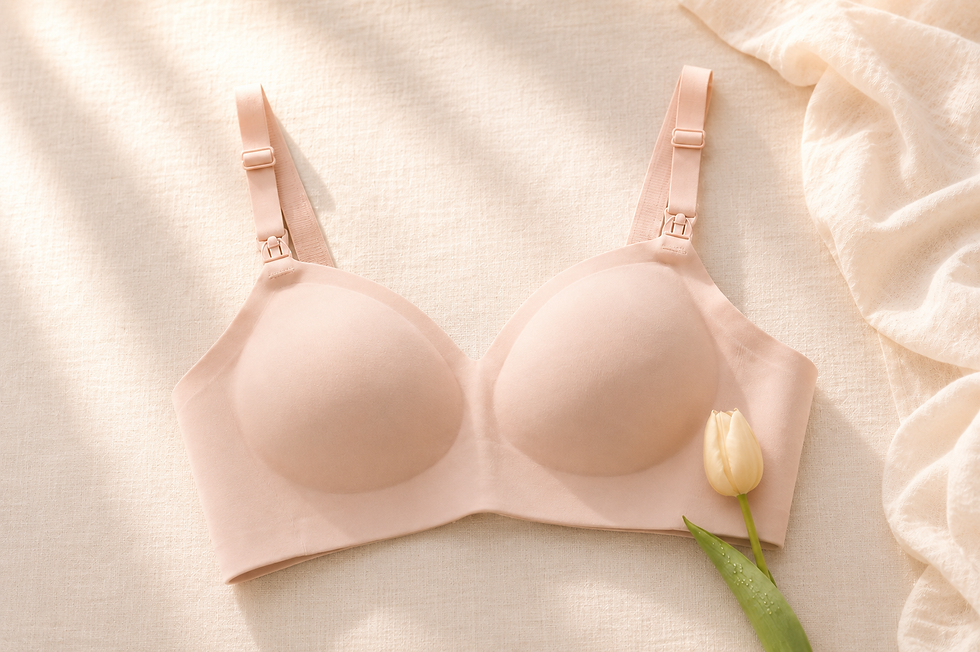
Nursing bras are designed for breastfeeding. They include features that make feeding easier, such as drop-down cups or front clips.
Some bras can work for more than one stage, but they’re not exactly the same.
Some nursing bras are soft and flexible enough to feel comfortable during pregnancy. Maternity bras, on the other hand, can still be worn after pregnancy for comfort, but they usually don’t include features like drop-down cups that make breastfeeding easier.

Maternity Bras: Comfort and Flexibility
During pregnancy, your body changes quickly. A well-designed maternity bra adapts with you.
Key features:
Soft, breathable fabrics
Stretch that accommodates size changes
Minimal or no underwire
Wider straps for added support
Common maternity bra styles:
Stretch-fit maternity bras
Seamless maternity bras
Wireless maternity bras
Sleep bras for pregnancy comfort
These styles are ideal for everyday wear, especially as your size fluctuates.

Nursing Bras: Function and Support
Nursing bras are designed to make feeding easier while maintaining support.
Key features:
Drop-down cups or front clips
Easy one-hand access
Structured support
Space for nursing pads
Common nursing bra types:
Clip-down nursing bras
Sleep nursing bras
Pumping bras (hands-free options)

Best Fabrics for Comfort and Skin Health
Fabric plays an important role in comfort, especially during pregnancy and breastfeeding.
Recommended fabrics:
Cotton → breathable and gentle on the skin
Bamboo → soft and moisture-wicking
Modal → smooth, lightweight, and flexible
Fabrics to be cautious with:
Non-breathable synthetic materials
Rough or irritating textures
Fabrics that trap heat or moisture
Choosing breathable, soft materials can help improve overall comfort.
If you’d like to explore natural fabrics in more detail, read our guide to natural fiber bras and breathable materials.

How to Choose the Right Bra
The right choice depends on your stage and your needs.
During pregnancy:
Prioritize flexibility and softness
Choose bras that adapt to size changes
After birth:
Focus on accessibility and support
Look for features like easy-open cups or clips that make breastfeeding more comfortable and convenient
Before selecting a bra, it can be helpful to understand your current size and fit.

When Should You Switch?
There is no exact moment, but general guidance can help.
Consider maternity bras when your regular bras begin to feel tight or restrictive
Transition to nursing bras closer to your due date or once breastfeeding begins
Comfort is often the best indicator.

Final Thoughts
The right bra during pregnancy and breastfeeding should feel supportive, comfortable, and easy to wear.
A thoughtful choice can make a noticeable difference in your daily comfort and overall experience.
Your size can change during pregnancy and after. Our Bra Calculator can help you find a more comfortable fit.